
English| EUR
Suggested for you
More currencies
Choose a language
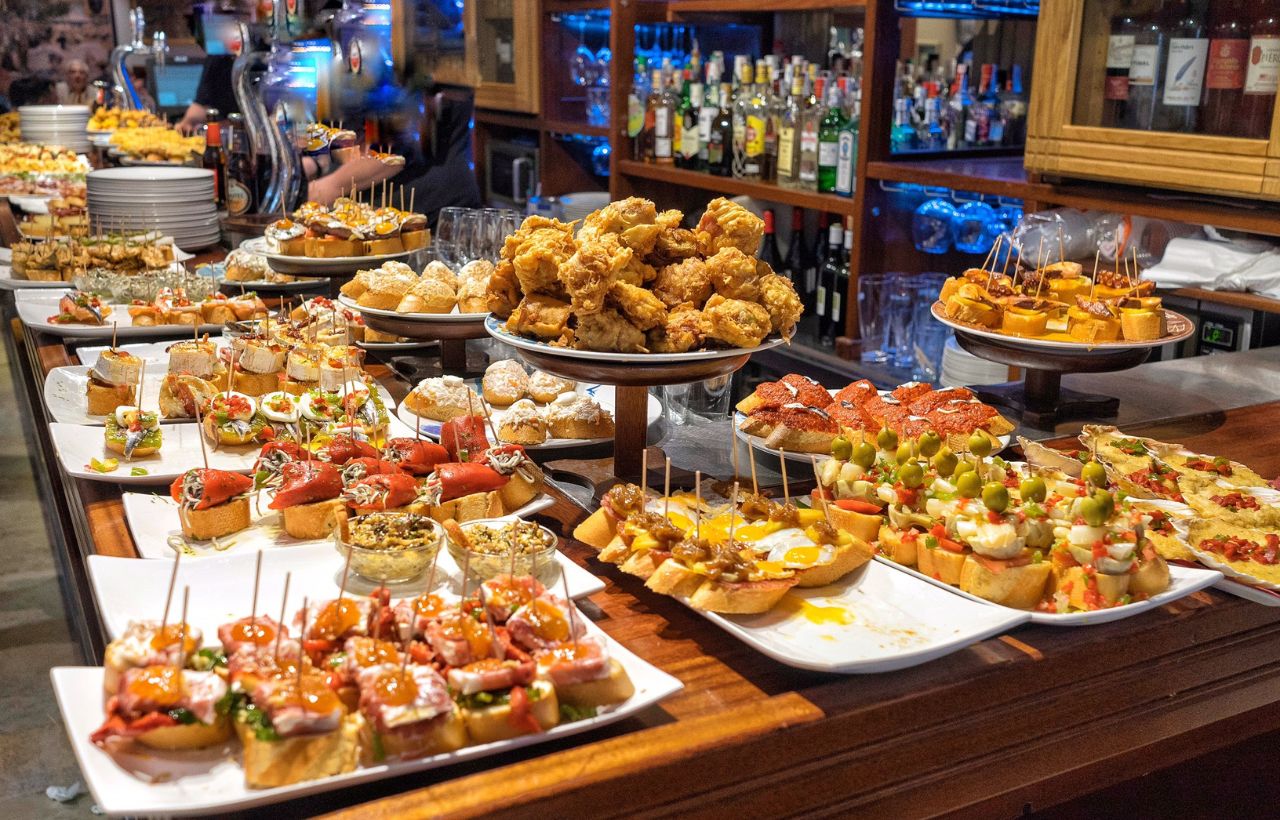
Tapas define how Madrid eats and socializes. These small plates appear in nearly every bar across the city, ordered individually and shared among groups standing at counters or seated at tables. The format turns dining into a social progression rather than a single meal.
Quick answer
Tapas are small portions of food served in Madrid's bars and restaurants, typically costing between 3 and 8 EUR per plate. Unlike the free tapas traditions in southern Spain, Madrid establishments charge for each selection. Portions range from bite-sized appetizers to small shared plates, designed for ordering multiple dishes across the course of an evening while moving between venues during the city's extended social hours from lunch through late night.
The word tapa originally meant lid—centuries ago, bar owners placed slices of bread or ham atop drinks to keep flies out. That practical cover evolved into Madrid's defining culinary format, where the small plate anchors the city's social rhythm rather than serving as an appetizer. Understanding what tapas mean in Madrid requires separating myth from practice. While Andalusian cities maintain traditions of complimentary tapas with drinks, Madrid operates on a pay-per-plate model. Each tapa costs individually, with prices posted on chalkboards or printed menus. Portion sizes deliberately fall between an appetizer and an entrée, calibrated for sharing among two to four people. Classic options span patatas bravas with spicy sauce, jamón ibérico on crusty bread, gambas al ajillo swimming in garlic oil, croquetas with creamy béchamel centers, and pimientos de Padrón blistered in coarse salt. The format invites sampling across multiple dishes rather than committing to a single large plate. Madrid's tapas culture operates on implicit social choreography. Groups typically order three to five plates at a time, eating standing at bar counters or seated at small tables. The progression often involves moving between multiple venues over several hours—a practice called ir de tapas or tapear. Peak activity concentrates during traditional lunch windows from 13:00 to 16:00 and dinner hours stretching from 21:00 past midnight. Neighborhoods like La Latina, Malasaña, and Chueca concentrate dozens of tapas bars within walking distance, enabling venue-hopping without transportation. The Spanish tapas tradition in Madrid prioritizes conversation and prolonged social time over rapid dining. Orders arrive as they finish cooking rather than coursed formally, and tables remain occupied for hours without pressure to vacate. This extended cadence means what appears as a light snack expands into a full evening's activity, with food serving as punctuation between drinks and discussion rather than the event's sole focus.
“The word tapa originally meant lid—centuries ago, bar owners placed slices of bread or ham atop drinks to keep flies out.”
The best time to experience tapas in Madrid occurs during the traditional lunch window from 13:00 to 16:00 and the evening dinner window from 20:00 to 23:00. These hours align with local social rhythms when venues reach their peak atmosphere.
Pleasant, 15°C to 24°C
Ideal for outdoor terrace dining and street-side tapas hopping.
Very warm, 20°C to 35°C
Evening hours are preferred to avoid high daytime temperatures.
Mild, 12°C to 22°C
Crisp weather complements walking between multiple culinary establishments.
Cool, 3°C to 12°C
Indoor bars offer a cozy environment during cooler months.
Verdict: The best overall experience is found Tuesday to Thursday during the spring months of April and May, focusing on the 13:00 to 16:00 and 20:00 to 23:00 peak social windows.
Tapas culture in Madrid operates continuously throughout the week. While the city maintains this broad availability, individual establishments set their own specific service schedules within these windows.
Tapas culture in Madrid operates on a pay-per-item basis rather than through admission fees. Your total expense is determined solely by the number of food and drink orders placed at each venue.
Verdict: An adult pays 0 EUR for entry, with total spending dictated entirely by the quantity and selection of individual tapas and drinks purchased.
Tapas are not a specific food, but rather a method of serving that defines the social rhythm of dining in Madrid. This culinary tradition centers on small portions consumed in a sequence of social visits known as ir de tapas.
The word tapa translates to lid or cover, historically referring to a small plate or slice of bread placed over a glass of wine to keep debris out.
This verb phrase describes the practice of moving from bar to bar, enjoying a drink and a small plate at each stop rather than sitting for one large meal.
Tapas range from simple olives and potato chips to complex preparations like gambas al ajillo, which is shrimp sautéed with garlic and chili.
A tapa is a small sample, while a racion is a larger plate intended to be shared among a group of people at the table.
In many traditional Madrid establishments, customers eat standing at the bar or at high tables to maintain the dynamic flow of the social environment.
Madrid serves as a culinary crossroads, featuring tapas styles from every Spanish region, including Basque-style pintxos which are often served on bread with a skewer.
Madrid's tapas culture follows unwritten social codes that shape the experience. Understanding these practices helps you blend into the rhythm of local bars.
Experiencing tapas in Madrid follows a simple ritual practiced by locals during traditional meal hours. The entire process—from entering a bar to moving to your next stop—takes 20 to 40 minutes per venue.
Walk into any tapas bar and position yourself at the counter or a standing table. Many visitors wait for table service when ordering at the bar is expected—signal the bartender with eye contact once you've chosen your spot.
Request a beer, wine, or vermouth before mentioning food. The drink order establishes your presence and many bartenders will suggest tapas pairings once your beverage arrives.
Indicate the specific tapa you want from the glass case or chalkboard menu. Saying "uno de eso" (one of that) while pointing eliminates language barriers and ensures you receive the correct item.
Settle your tab after each drink-and-tapa combination or before leaving. Keeping a mental tally prevents confusion, as bartenders often remember orders without writing them down.
Finish your drink, pay, and walk to another venue within the same neighborhood. Staying at one location contradicts the tapeo tradition—locals typically visit three to five bars in a single outing.
Everything you need to know about what are tapas in madrid
In the context of the Madrid culinary scene, these are small, flavorful plates of food served alongside a drink in bars and taverns. To understand what are tapas in Madrid is to appreciate a social ritual that revolves around moving from bar to bar. This practice allows locals to sample a variety of appetizers such as olives, gambas al ajillo, or tortilla española throughout the evening. You might consider joining a professional Madrid tapas tour to better understand what are tapas in Madrid and to discover authentic, hidden culinary spots.
There is no formal entrance fee to access tapas venues, as the culture involves purchasing individual food and drink items at each establishment. You simply pay for what you order at the bar or after sitting at a table. This flexible model makes it easy to enjoy as much or as little as you desire while exploring local gastronomy. Because there is no cover charge, you are free to visit multiple venues without financial commitment to any single place.
The best arrival window for soaking up the local atmosphere is 13:00–23:00 when the city is most active. These hours align with traditional lunch and dinner patterns when bars are bustling with social energy. Visiting during these peak times ensures you experience the authentic noise and camaraderie that define the Madrid culinary scene.
Many venues are welcoming to families, though the environment can be quite busy and standing-room only in traditional spots. If you are curious about what are tapas in Madrid while traveling with children, look for taverns with seating areas or visit earlier in the late afternoon. This allows for a more relaxed experience away from the late-night crowds. The variety of bite-sized food options often appeals to younger palates, making it an accessible way to introduce local flavors.
A frequent error is trying to eat a full meal at the first bar instead of pacing yourself for a crawl. To truly enjoy what are tapas in Madrid, remember that the experience is designed as a progression across multiple locations. Keep your portions small at each stop so you have room to taste a wider range of regional specialties. Staying in one place prevents you from enjoying the full breadth of the city's diverse and historic culinary landscape.
Navigating a food crawl is best done by walking between neighborhood bars and ordering a drink with a local tapa. You will find that many bars specialize in a specific item, such as mushrooms or jamón, which helps narrow down your choices. If you prefer a curated experience, an expert-led gastronomic excursion can provide context and history behind each bite. This structured approach helps ensure you visit the most authentic, time-tested establishments in the city.
Reservations are generally not required for casual tapas bars, as they rely on a high-turnover, informal service style. You are expected to walk in, find a spot at the bar, and place your order directly with the staff. If you plan to visit a sit-down restaurant for a larger meal that includes tapas, checking their specific policy is wise, but for authentic bar-hopping, spontaneous arrival is the norm.
Tipsy Tapas Tours in Madrid
Read more GuideThe Best Tapas Tours in Madrid
Read more Tickets & toursMadrid Tapas Walking Tours
Read more GuideHow to Order Tapas in Madrid
Read more Tickets & toursPrivate Madrid Tapas Tours
Read more Tickets & toursTapas and Flamenco Tours in Madrid
Read more