
English| EUR
Suggested for you
More currencies
Choose a language
Madrid's tapas bars operate on a rhythm foreign to most visitors — no hostess, no printed menus at many counters, and payment that happens only when you leave. Understanding the local ordering protocol turns what feels chaotic into an efficient, welcoming experience.
Quick answer
Ordering tapas in Madrid follows a counter-based system: approach the bar, make eye contact with staff, and request tapas by name or by pointing at the displayed plates. Payment occurs at the end when you ask for "la cuenta." Most traditional bars expect orders in Spanish, though staff in tourist areas accommodate English. The process requires no reservations and works on a first-come basis during peak hours from 13:00 to 22:00.
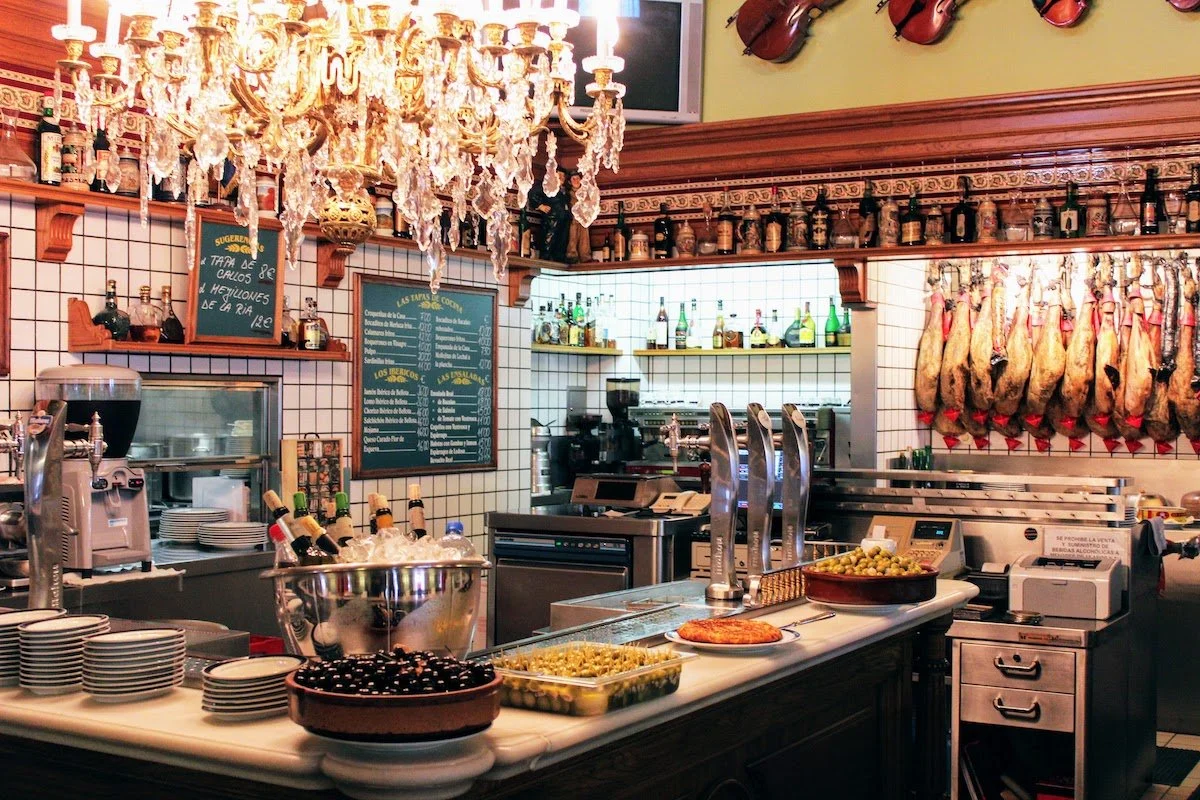
Madrid's tapas bars reject the seated-service model that dominates restaurant culture elsewhere. The counter is the command center — glass cases display prepared plates, bartenders slice jamón to order, and regulars lean against the bar rail nursing a caña while debating fútbol. This standing tradition, rooted in the city's working-class taverns, means efficient turnover and close proximity to the food itself. The ordering sequence is direct. You step to the bar, wait for the bartender's eye, and state your selection: "Dos croquetas y una de tortilla, por favor." Pointing works when names escape you. The bartender delivers plates immediately or within minutes, depending on preparation. Drinks arrive first. Each item lands on the counter in front of you, no written tab tracking the total — the bartender remembers, an unofficial skill honed over decades. When ready to leave, you request the bill with "la cuenta" or "¿cuánto es?" and settle at the bar. Tipping is not obligatory; rounding up a euro or two suffices. Madrileños rarely occupy a single bar for an entire evening. The custom of "ir de tapas" — going for tapas — implies movement, sampling two or three plates at one spot before migrating to the next. This bar-hopping circuit explains why menus stay concise and service stays brisk. Peak activity clusters between 13:00 and 15:00 for lunch and 20:00 to 22:00 for dinner, when neighborhood bars fill with locals. Arriving mid-afternoon often means empty counters and full bartender attention. Language proves less of a barrier than anticipated. Core vocabulary covers most needs: "una caña" for draft beer, "un vino tinto" for red wine, "¿qué me recomienda?" to solicit a recommendation. Bartenders in La Latina and Malasaña navigate English requests without issue, though attempting Spanish — however halting — earns goodwill. The real protocol is behavioral: keep your spot at the counter clear, dispose of napkins in the bin or on your plate, and avoid waving money in the air before the bill is tallied. Madrid's tapas culture rewards participation over perfection, and the learning curve lasts exactly one bar.
“The counter is the command center — glass cases display prepared plates, bartenders slice jamón to order, and regulars lean against the bar rail nursing a caña.”
Ordering tapas in Madrid follows a consistent pattern across most bars. The entire process—from claiming a spot to paying—typically takes 5 to 10 minutes per round.
Walk to the bar counter for the fastest service, or take a table if you prefer to sit. Many locals stand at the bar; servers will notice you once you're positioned.
Request wine, beer, or vermouth before food. Bartenders often ask for your drink order immediately, and it establishes your tab.
Most bars display prepared tapas under glass at the counter. Point and say "uno de eso" (one of that) rather than reading from a menu.
Ask for items like patatas bravas or croquetas that are cooked to order. Specify quantity: "una de patatas bravas" or "dos de croquetas."
Bars rarely bring a running bill. The bartender remembers what you ordered, so keep a rough count yourself to avoid confusion.
Say "la cuenta, por favor" when you're ready to leave. The server will tally your items and present the total.
To experience the Madrid tapas scene at its most authentic, the best arrival window is 13:00–22:00. This timeframe aligns with local dining customs and helps you avoid mid-afternoon lulls while ensuring you arrive when kitchens are fully operational.
—
Bars are quieter, allowing for easier movement between venues. You will find more space to stand at the bar during these hours.
—
Local social life intensifies; expect lively, packed environments. Arrive early in this window to secure a spot.
Mild 15°C to 25°C
Ideal weather encourages outdoor terrace dining. These seasons offer the most comfortable temperatures for walking between bars.
Verdict: The best time to visit is Tuesday to Thursday between 13:00 and 22:00 during the months of April or October.
Madrid's tapas culture follows unwritten social codes that regulars take for granted. Respecting bar-hopping rhythm, tipping norms, and counter etiquette will help you blend in.
Tapas bars in Madrid operate on a pay-per-item basis rather than an admission fee structure. Your total cost depends entirely on the quantity of food and beverages consumed.
Verdict: A typical adult pays only for the specific items ordered, with costs fluctuating based on the number of plates and drinks selected.
Tapas bars in Madrid maintain a consistent schedule throughout the week to accommodate visitors. Establishments remain open daily, providing access to culinary options across the city at any time.
Everything you need to know about how to order tapas in madrid
You typically approach the bar, catch the server's attention, and request your desired items or drinks. While some places feature pre-prepared dishes on the counter, others require you to order from a menu. Tapas culture is informal and centered around social interaction at the counter.
No, tapas bars in Madrid have no entry fee; customers pay only for food and drinks. You are free to move between establishments without any cover charge.
The best arrival window is 13:00–22:00, as this timeframe avoids mid-afternoon lulls and aligns with traditional Spanish lunch and dinner peak hours. Visiting during these periods ensures the most lively atmosphere.
Yes, families are generally welcome in the local culinary scene. However, keep in mind that many bars are standing-room only and can become quite crowded during peak hours.
The most common mistake is ordering too much food at the first stop. It is better to order one or two items per location to enjoy a wider variety of regional flavors across the city.
Yes, establishments generally operate daily from 00:00–23:59. This ensures you can find local delicacies throughout the week regardless of your schedule.
A guided culinary exploration helps you navigate local customs and discover hidden gems you might otherwise overlook. It provides context on regional ingredients and pairing traditions that define the local gastronomy.
Tipsy Tapas Tours in Madrid
Read more GuideThe Best Tapas Tours in Madrid
Read more Tickets & toursMadrid Tapas Walking Tours
Read more GuideWhat are Tapas in Madrid?
Read more Tickets & toursPrivate Madrid Tapas Tours
Read more Tickets & toursTapas and Flamenco Tours in Madrid
Read more